1:0.8 Dual-Carb Ratio Explained – Higher Carbohydrate Intake and Better Absorption
To excel in endurance sports, consuming carbohydrates is essential. However, consuming too much is useless if your body cannot absorb them. This is where the 1:0.8 ratio comes into play.
1. The Problem: The Intestinal "Bottleneck"
Imagine your intestine is a highway with a single toll booth called SGLT1. This booth only allows glucose to pass.
-
The Limit: This booth becomes saturated at approximately 60 g per hour (¹).
-
The Risk: If you consume 90 g of glucose, 30 g remain "stuck" in your intestine. This surplus is what causes bloating, cramping, and nausea (¹).
2. The Solution: Dual-Transport (Glucose + Fructose)
To absorb more energy without saturating the SGLT1 toll booth, science has discovered a "second door": the GLUT5 transporter, which exclusively accepts fructose (¹). By combining glucose and fructose, you use two doors instead of one. This allows athletes to absorb 90 to 120 g of carbohydrates per hour, representing up to 50% more energy compared to glucose alone (²)(³).
3. Why is the 1:0.8 Ratio the Most Effective?
The choice of this ratio is not a matter of chance. Here is how it compares:
-
Glucose alone: Capped at 60 g/h (¹).
-
2:1 Ratio: Effective, but does not sufficiently utilize the fructose "door" during very high-intensity efforts (³).
-
1:1 Ratio: Risk of overloading the fructose door, which can lead to distress for some athletes (³).
-
1:0.8 Ratio (Optimum): The right balance. It engages both doors (SGLT1 and GLUT5) to their maximum capacity without saturating them (³).
The Result: You deliver up to 1.7 – 1.8 g of energy per minute to your muscles while keeping your stomach light (³).
Our Solution: ATOM GEL 30 and ISO 30
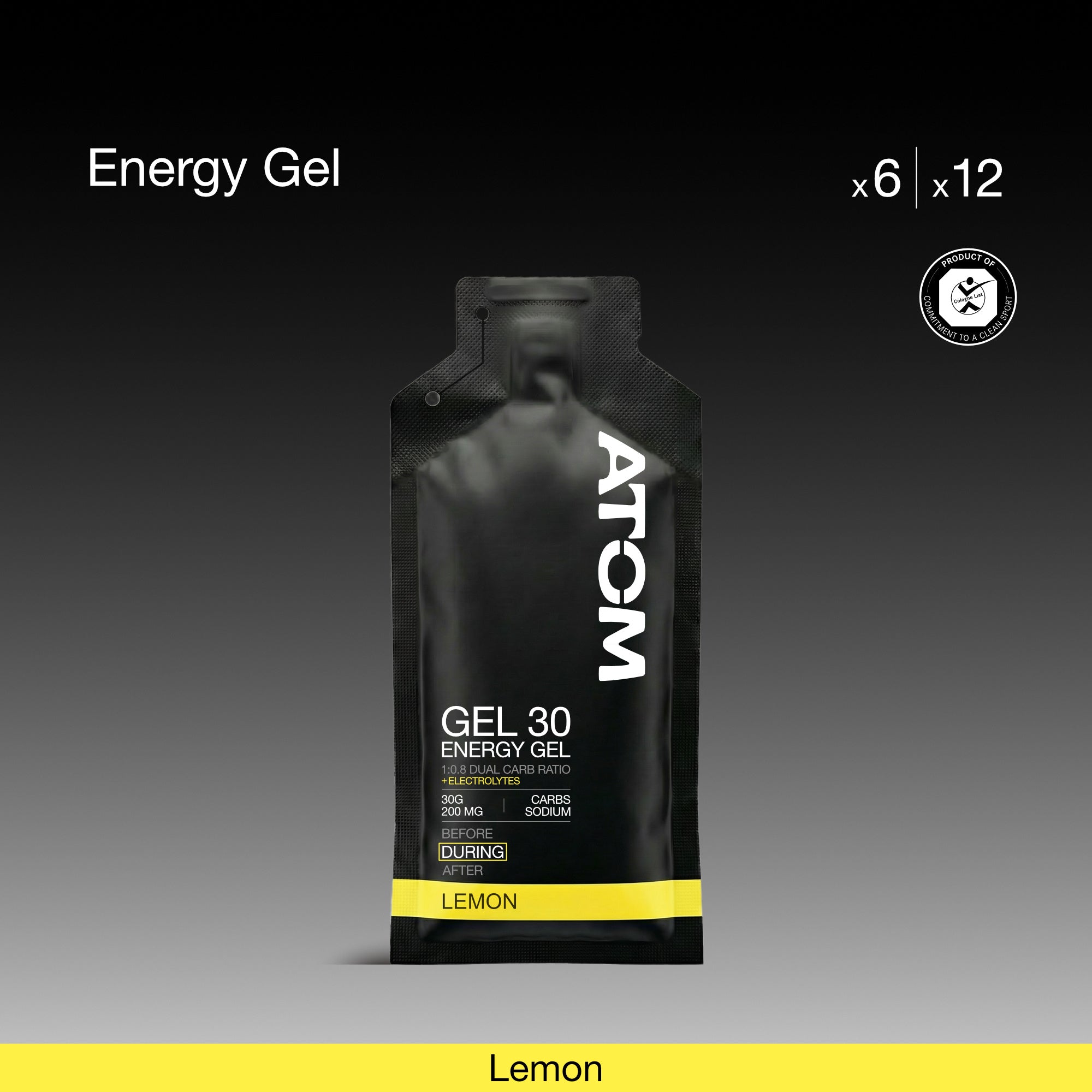
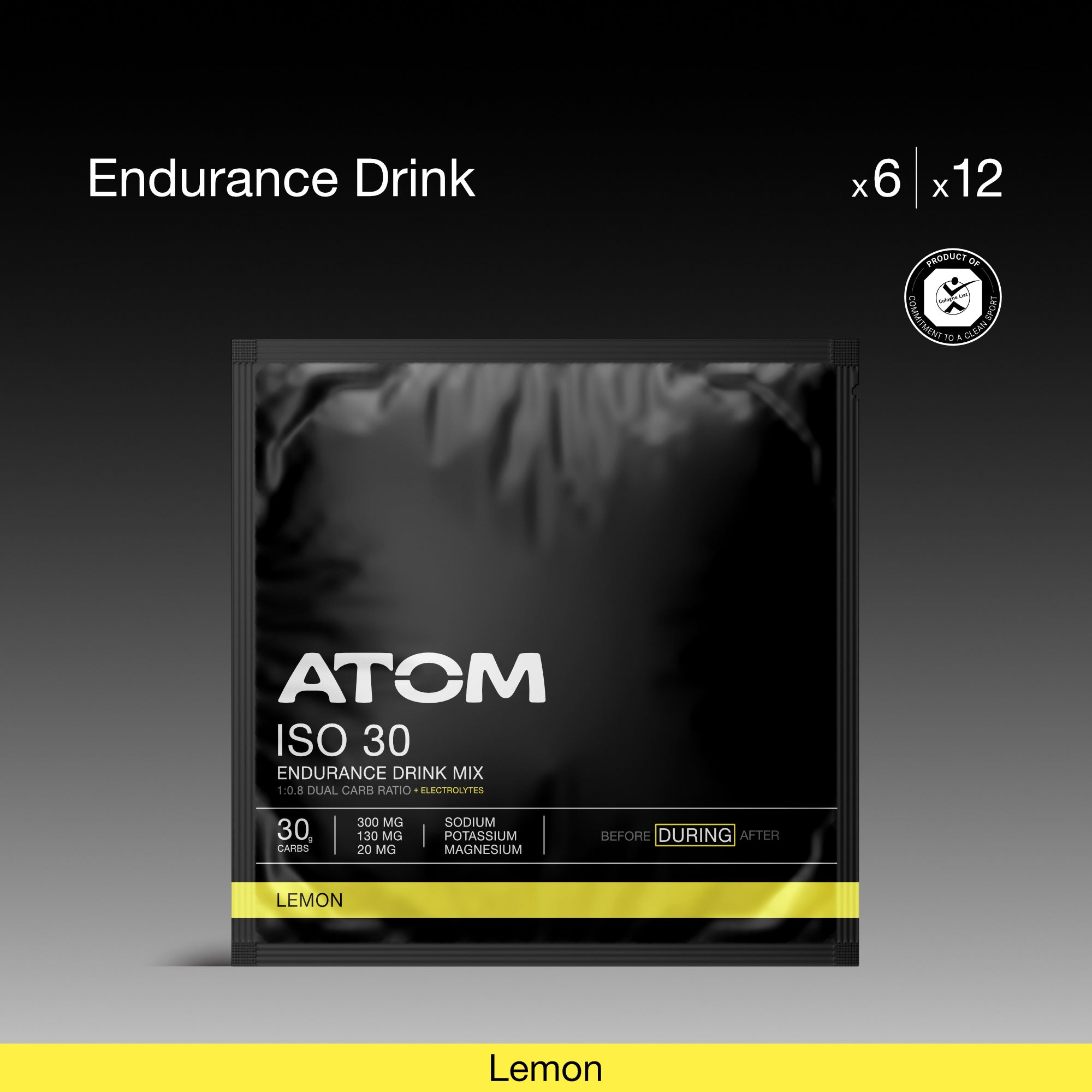
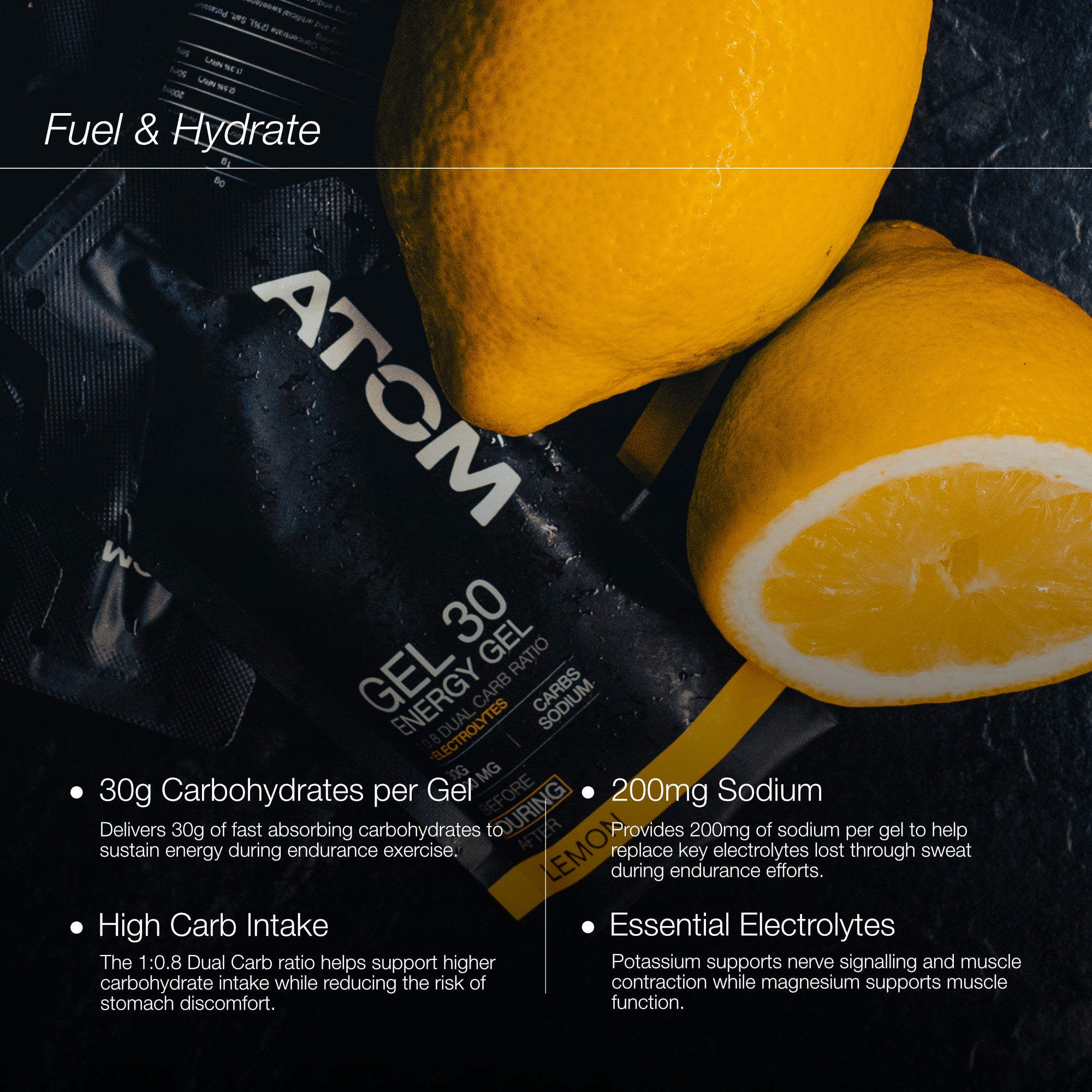
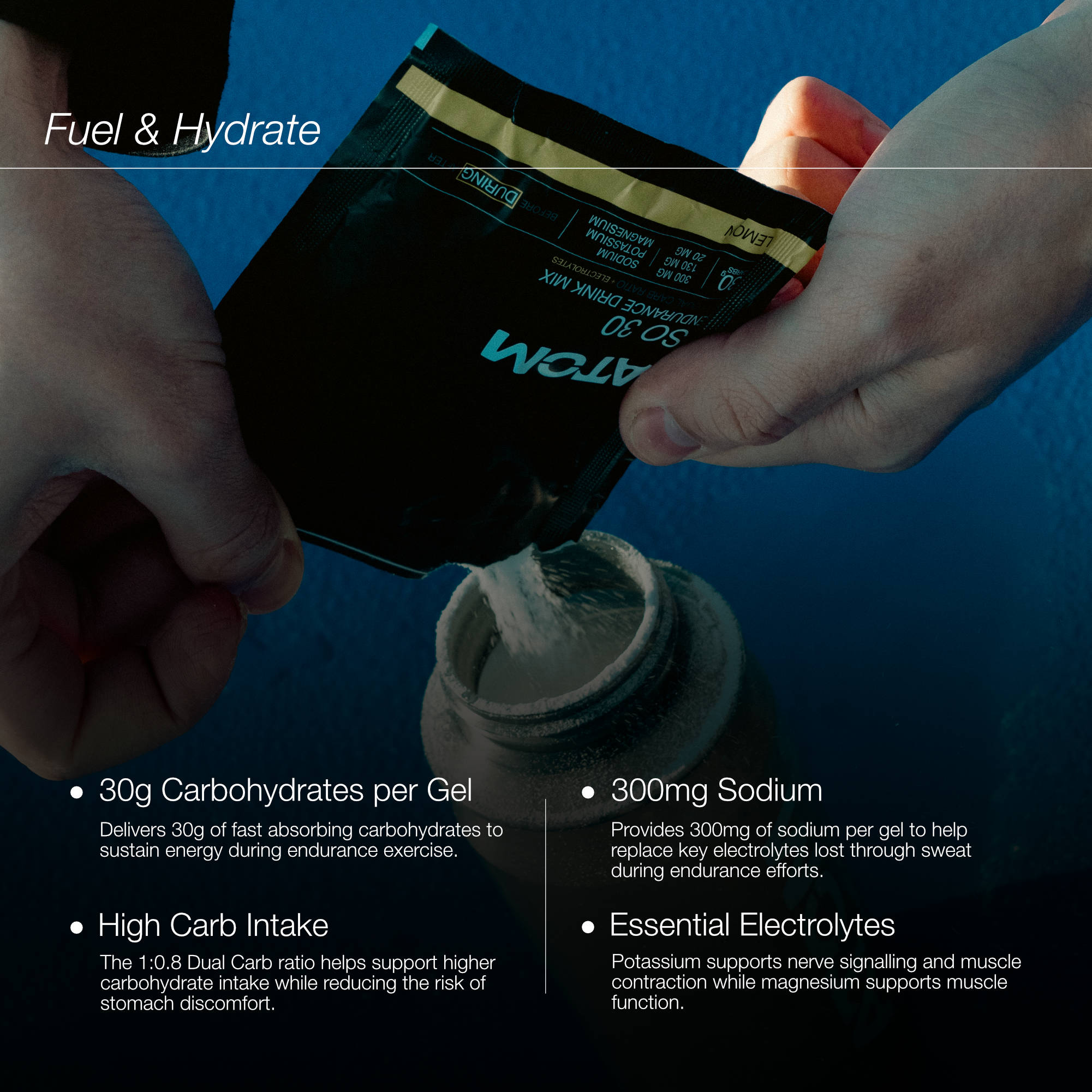
We have integrated this scientific ratio in two of our key products: ATOM GEL 30 and the ISO 30 drink. Why these products? Because these are the ones athletes use the most extensively during longer or intense efforts, where the risk of digestive issues is highest.
What this changes for you?
-
Increased Absorption Capacity: Maximum absorption (90-120 g/h).
-
Constant Energy: Reduction in the risk of "hitting the wall" thanks to higher carb intake.
-
Reduced Intestinal discomfort: Lower risk of abdominal cramps and nausea.
Conclusion
Proper fueling for endurance sports is not just about consuming carbohydrates; it is about choosing forms that your body can actually use. The 1:0.8 ratio is currently one of the most advanced formulas to maximize your performance while ensuring a better digestion.
References
(¹) Jeukendrup, A. E. (2017). Training the Gut for Athletes. Sports Medicine, 47(Suppl 1), 101-110. https://doi.org/10.1007/s40279-017-0690-6
(²) Fuchs, C. J., Gonzalez, J. T., & van Loon, L. J. C. (2019). Fructose co-ingestion to increase carbohydrate availability in athletes. The Journal of Physiology, 597(14), 3549-3560. https://doi.org/10.1113/JP277116
(³) Rowlands, D. S., Houltham, S., Musa-Veloso, K., Brown, F., Paulionis, L., & Bailey, D. (2015). Fructose-Glucose Composite Carbohydrates and Endurance Performance: Critical Review and Future Perspectives. Sports Medicine, 45(11), 1561-1576. https://doi.org/10.1007/s40279-015-0381-0


Related Products