Why Sodium Matters: The "Beyond Just Water" Rule for Athletes
When you think about hydration, your mind probably jumps straight to water. But for an endurance athlete, water is only half the story. The complete picture requires understanding electrolytes, specifically sodium, the primary mineral your body leaks through your pores when you sweat (⁸).
Recognizing sodium’s role can be the difference between a personal best and a "did not finish." Research demonstrates that failing to replace fluids and salt increases cardiovascular stress, raises your body temperature, and tanks your aerobic capacity (³).
Beyond Just Water: The Osmotic "Magnet"
Think of sodium as a biological magnet. In your body, water follows sodium. This is known as osmosis. If you drink massive amounts of plain water without enough sodium, you actually "dilute" your blood. Instead of staying in your bloodstream to cool you down and fuel your muscles, the water drifts into your cells, causing them to swell.
This is why "just water" isn't enough for long efforts, you need the sodium "magnet" to keep the fluid in your blood vessels where it can actually do its job (¹⁰).
What Exactly is Sodium?
Sodium is a vital mineral that your body cannot produce on its own (⁹). When dissolved in your blood or sweat, it carries a positive electrical charge, which is why we call it an electrolyte.
-
Nerve Signals: Your nervous system relies on sodium moving across cell membranes to generate the electrical impulses that power your movement (⁶). When your brain says "sprint," sodium ions flood across these membranes to send the message. Without enough sodium, those signals can become weak or mistimed.
-
Muscle Contraction: Your muscles use a "sodium-potassium pump" to reset themselves after every contraction (⁵). During intense exercise, sodium is constantly shifting between the inside and outside of your cells (⁴). If your sodium levels drop too low, this pump falters, leading to muscle weakness or a loss of coordination.
How much sodium do you really need? Timing and quantities
When exercise exceeds 2 hours, or if you are a heavy sweater, expert organizations suggest targeting 300 to 600 mg of sodium per hour to offset what is being lost (⁸). For shorter efforts in cool weather, you can usually wait until your post-workout meal to restore your sodium levels.
The timing and quantity of sodium intake depend heavily on your workout. For moderate-to-intense sessions lasting around 60 minutes, especially in the heat, beverages containing 230–690 mg/L of sodium help maintain hydration and performance (¹).
Why Athletes Are a "Special Case"
Public health guidelines often tell people to cut back on salt to protect their hearts (¹¹). However, athletes are a distinct category. While the general population often consumes too much salt while sitting still, athletes are actively sweating it out. For an athlete, replacing what is lost in sweat isn't "excessive", it is necessary to prevent performance decline and health issues like hyponatremia (⁷).
Performance vs. Safety: The Balancing Act
Using a high-quality electrolyte drink does more than just quench thirst; it manages the fine line between peak effort and medical risk.
-
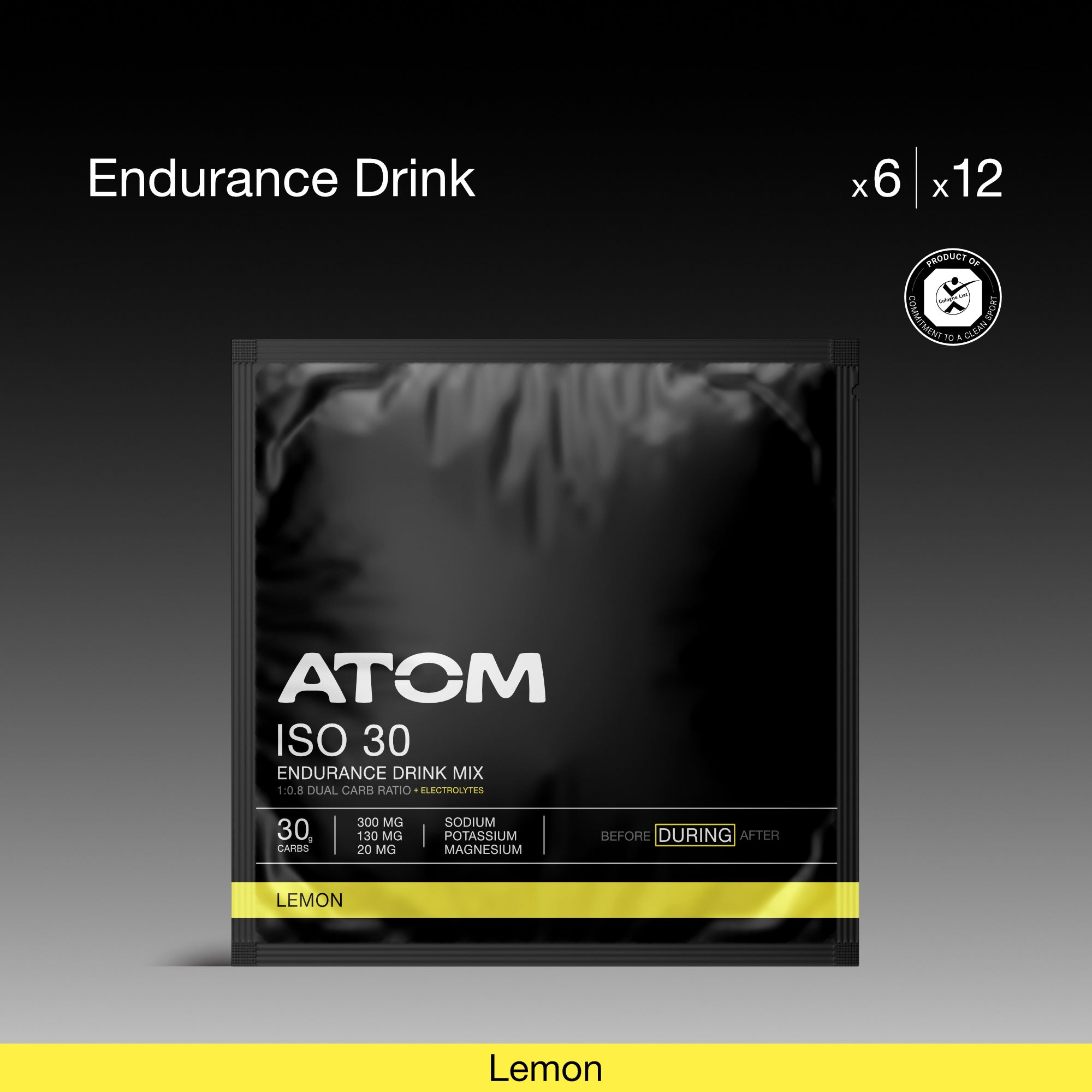
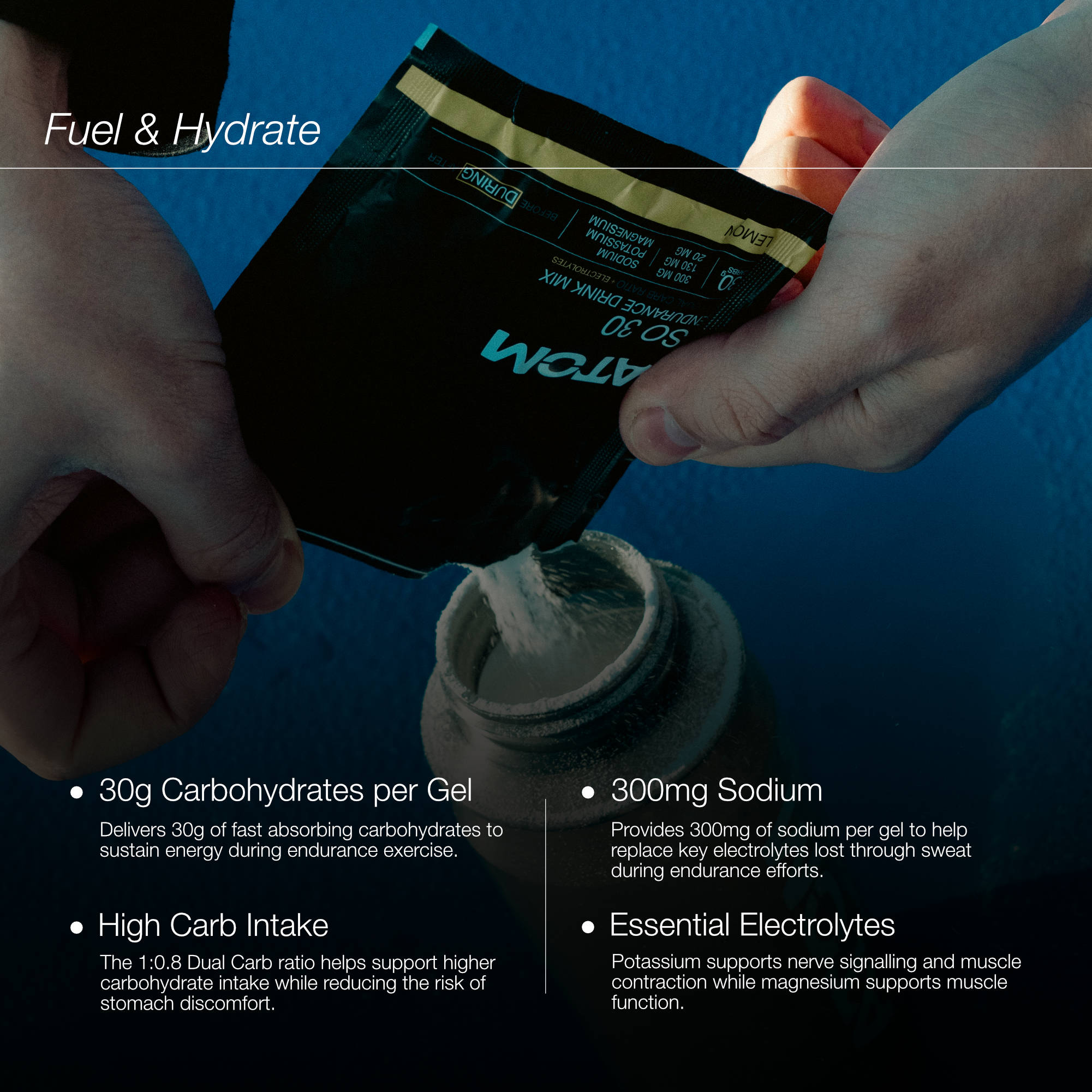
Endurance / Sport Drink Mix: Drinks that combine carbohydrates and sodium—like ATOM ISO 30, activate "co-transporters" (specifically SGLT1) in the gut. These act like a fast-pass lane, pulling water and energy into your bloodstream significantly faster than water alone (¹).
-
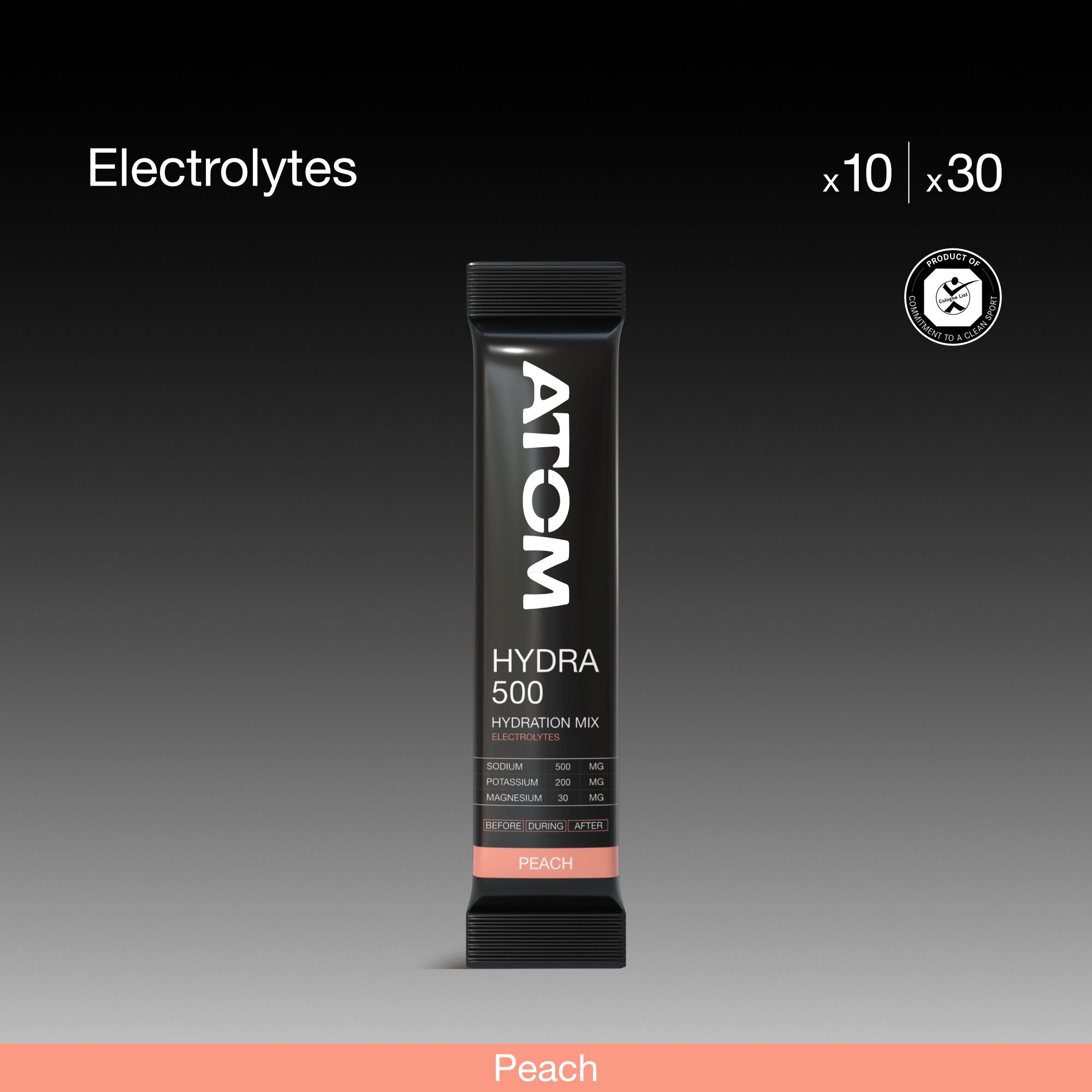
Electrolyte Drinks: For shorter sessions or athletes focusing on specific fueling goals, a carb-free electrolyte option like ATOM HYDRA 500, provides the necessary sodium (500 mg per serving) to maintain fluid balance without the added energy.
-
Avoiding the "Dilution" Trap: The biggest danger for long-distance athletes is Exercise-Associated Hyponatremia (EAH). This happens when you drink so much plain water that your blood sodium levels drop dangerously low (²). This dilution creates an osmotic imbalance, forcing water out of your blood and into your cells, causing them to swell.
-
The Real Risk: While swollen muscle cells are uncomfortable, brain cell swelling is a life-threatening emergency. This is most common in races lasting over 4 hours, where athletes drink more water than they actually lose through sweat (²). Choosing an electrolyte-rich drink ensures that every sip supports your chemistry rather than diluting it.
Conclusion
Sodium is the "glue" that holds your hydration strategy together. It keeps your nerves firing, your muscles contracting, and your fluid levels balanced. By calculating your own sweat rate and being intentional about your sodium intake, you move "beyond just water" and give your body the tools it needs to finish strong.
References
(¹) American College of Sports Medicine. (1996). American College of Sports Medicine position stand. Exercise and fluid replacement. Medicine & Science in Sports & Exercise, 28(10), i-vii. https://doi.org/10.1097/00005768-199610000-00045
(²) Hew-Butler, T., Loi, V., Pani, A., & Rosner, M. H. (2017). Exercise-associated hyponatremia: 2017 update. Frontiers in Medicine, 4, 21. https://doi.org/10.3389/fmed.2017.021
(³) Shirreffs, S. M., & Sawka, M. N. (2011). Fluid and electrolyte needs for training, competition, and recovery. Journal of Sports Sciences, 29(sup1), S39-S46. https://doi.org/10.1080/02640414.2011.614269
(⁴) McKenna, M. J., & Bangsbo, J. (2008). Muscle K+, Na+, and Cl− disturbances and Na±K+ pump inactivation: Implications for fatigue. Journal of Applied Physiology, 104(1), 288-295. https://doi.org/10.1152/japplphysiol.01037.2007
(⁵) Clausen, T. (2013). Quantification of Na+, K+ pumps and their transport rate in skeletal muscle: Functional significance. Journal of General Physiology, 142(4), 327-345. https://doi.org/10.1085/jgp.201310980
(⁶) Shrimanker, I., & Bhattarai, S. (2023). Electrolytes. In StatPearls. StatPearls Publishing. https://www.ncbi.nlm.nih.gov/books/NBK541123/
(⁷) Stofan, J. R., Zachwieja, J. J., Horswill, C. A., Murray, R., Anderson, S. A., & Eichner, E. R. (2005). Sweat and sodium losses in NCAA football players: A precursor to heat cramps? International Journal of Sport Nutrition and Exercise Metabolism, 15(6), 641-652. https://doi.org/10.1123/ijsnem.15.6.641
(⁸) Sawka, M. N., Burke, L. M., Eichner, E. R., Maughan, R. J., Montain, S. J., & Stachenfeld, N. S. (2007). American College of Sports Medicine position stand: Exercise and fluid replacement. Medicine & Science in Sports & Exercise, 39(2), 377-390. https://doi.org/10.1249/mss.0b013e31802ca597
(⁹) Stefanidis, A., & Filippatos, T. D. (2022). Effects of sodium intake on health and performance in endurance and ultra-endurance sports. International Journal of Environmental Research and Public Health, 19(6), 3651. https://doi.org/10.3390/ijerph19063651
(¹⁰) Baker, L. B. (2017). Sweating rate and sweat sodium concentration in athletes: A review of methodology and intra/interindividual variability. Sports Medicine, 47(Suppl 1), 111-128. https://doi.org/10.1007/s40279-017-0691-5
(¹¹) O’Donnell, M. J., Yusuf, S., Mente, A., Gao, P., Mann, J. F., Teo, K., … & Yusuf, R. (2011). Urinary sodium and potassium excretion and risk of cardiovascular events. JAMA, 306(20), 2229-2238. https://doi.org/10.1001/jama.2011.1729


Related Products