
Electrolytes vs. Sports Drinks: The Ultimate Comparison
Deciding how to hydrate can be a confusing experience for any athlete. When faced with rows of different formulas, it is difficult to know whether your body needs a pure mineral boost or a full-spectrum energy drink. While they may look similar, electrolytes and sports drinks serve two very different purposes.
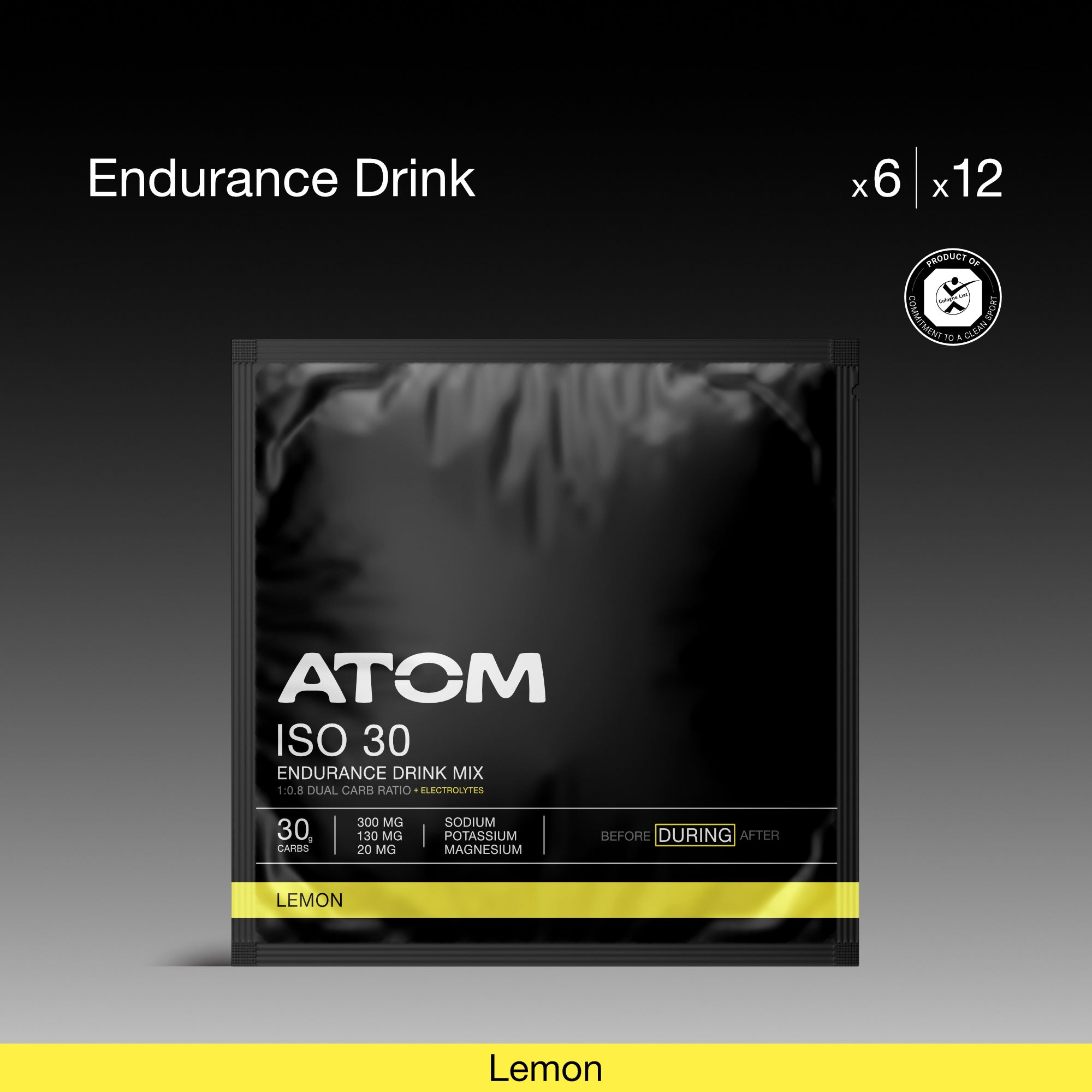
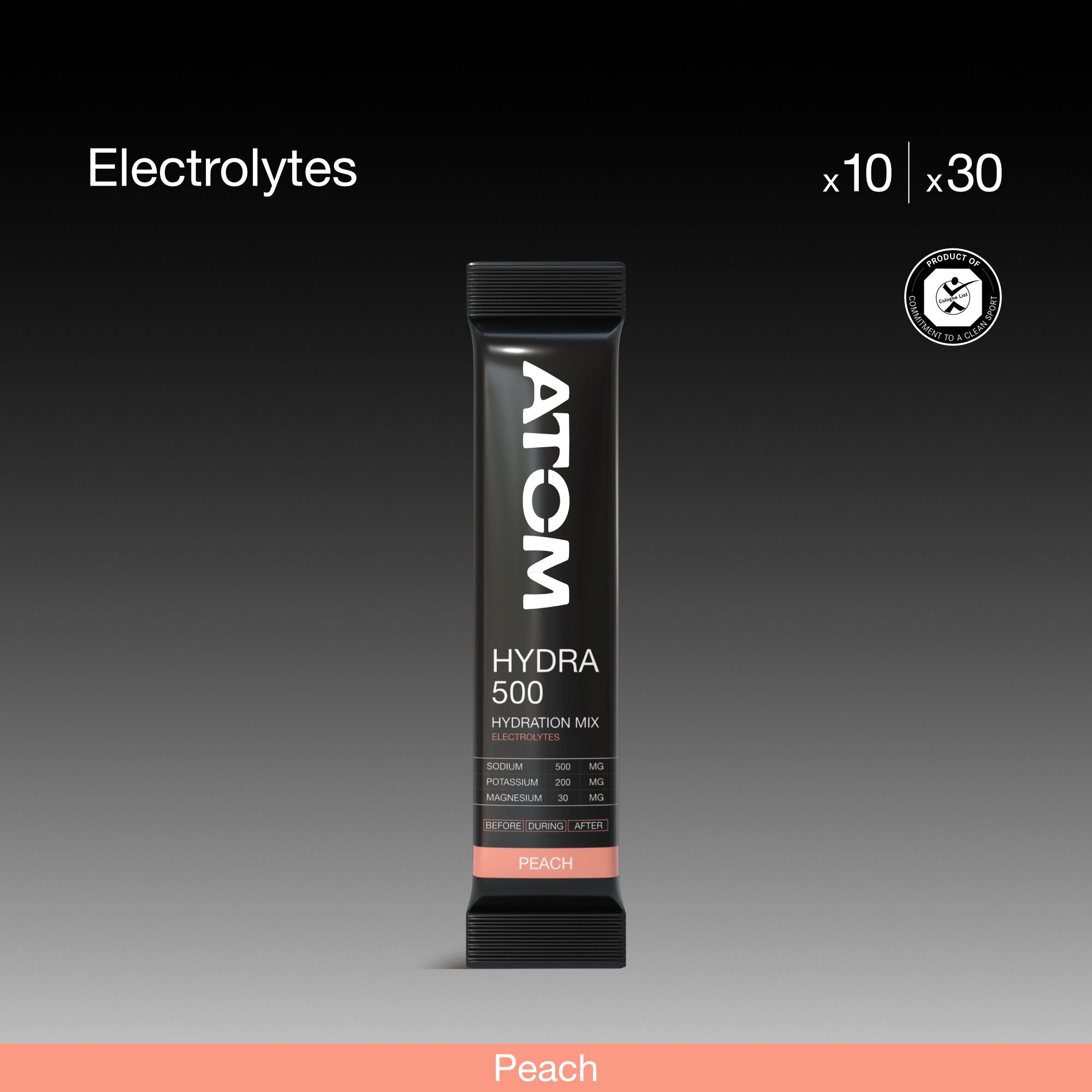
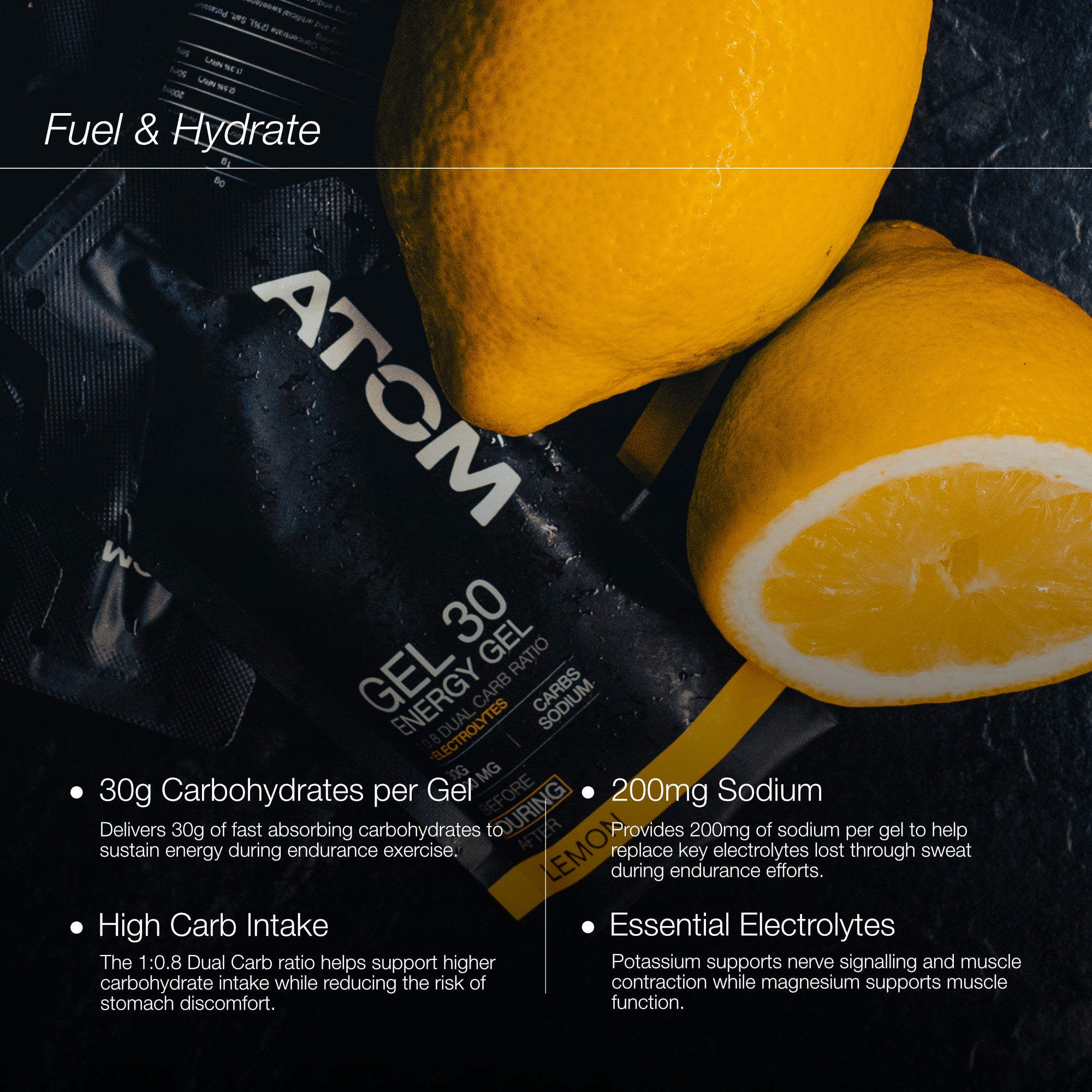
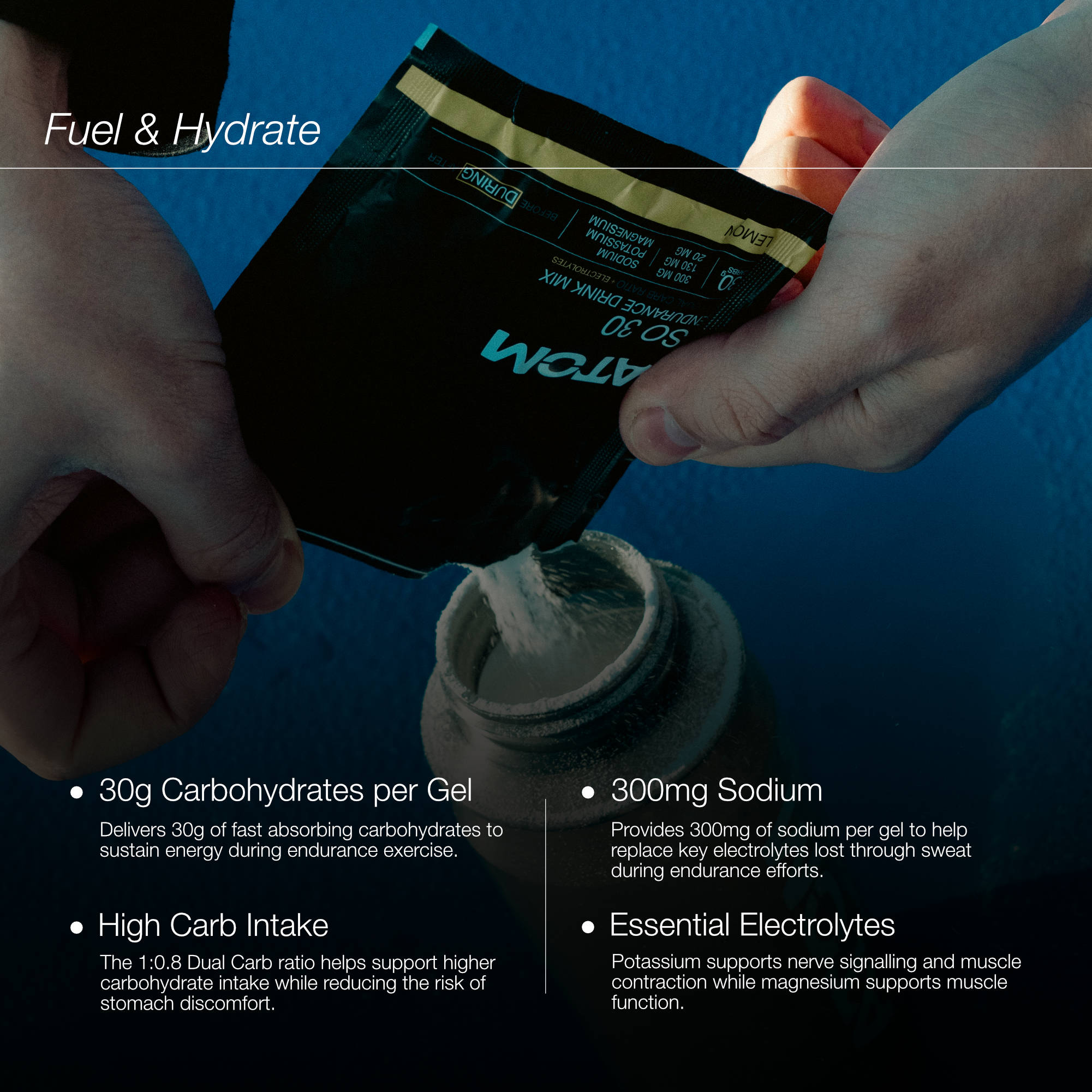
Selecting the right tool, whether it is the targeted mineral support of ATOM HYDRA 500 or the energy-sustaining attributes of ATOM ISO 30, depends entirely on the unique demands of your training.
What Are Electrolyte Drinks?
Electrolyte-focused drinks prioritize replenishing minerals with little to no added sugar. These are often hypotonic, meaning their low particle concentration pulls water into your circulation faster than more sugary beverages (²).
They primarily contain:
-
Sodium: This is the primary mineral lost in sweat (³). Replacing sodium during prolonged exercise in the heat is important for maintaining proper fluid and electrolyte balance and muscle function.
-
Potassium and Magnesium: These support the electrical signals that allow muscles to contract and relax (¹). Low levels can lead to cramping and reduced power output.
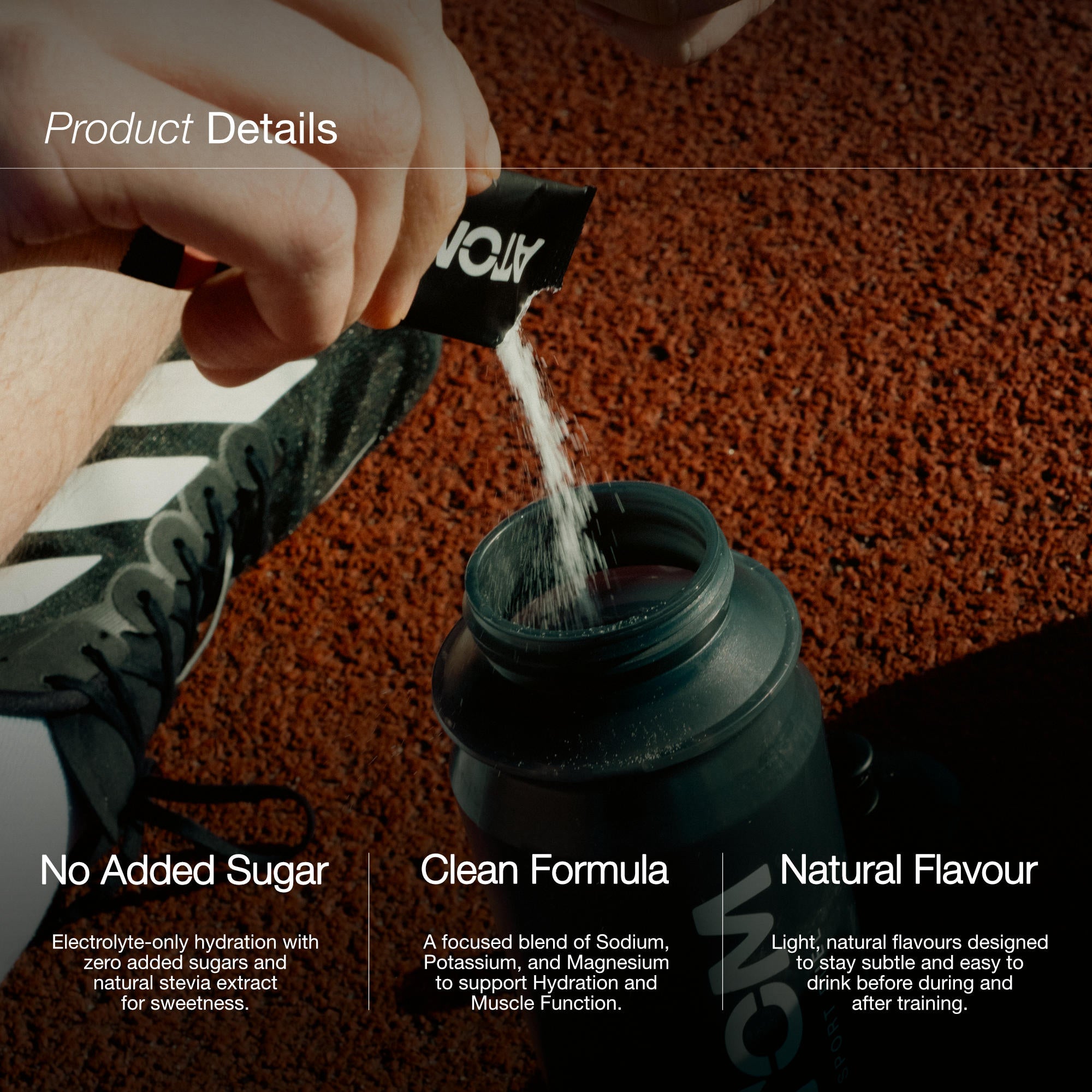
Product Highlight: ATOM HYDRA 500 is designed for pure mineral replacement. With 0g of carbohydrates, it delivers a high-impact dose of 500mg of sodium, 200mg of potassium, and 30mg of magnesium to support rapid rehydration without extra calories.
What Are Sports Drinks?
Sports drinks primarily combine carbohydrates and electrolytes (²). Their isotonic nature, which mirrors the concentration of the blood, ensures a fluid and rapid energy supply while protecting your digestive system during exercise.
-
Carbohydrate Content: Carbohydrates are the primary source of fuel during moderate to high-intensity activity. They are found in sports drinks in order to help keep your body’s glycogen levels high during longer activities (⁴).
-
Electrolyte Composition: Most sports drinks contain sodium, potassium, and magnesium to compensate for sweat losses and to maintain nerve function as well as muscle contraction.
Product Highlight: ATOM ISO 30 is an isotonic solution built for performance. It provides 30g of carbohydrates for sustained energy, paired with 300mg of sodium, 120mg of potassium, and 20mg of magnesium to maintain fluid balance during intense efforts.
Comparison: When to Use Each
Electrolytes - For High Sweat Rates & Sweaty Efforts
When you are training in the heat or are naturally a heavy sweater, your priority is replacing lost salt to prevent dehydration. In these "sweaty efforts," you can lose up to 7,000mg of sodium in a single day (⁵). For these purposes, ATOM HYDRA 500 contains higher sodium concentrations, which improve the amount of fluid your intestines absorb and your kidneys retain (⁶), keeping you hydrated without unnecessary sugar.
Sport/Endurance Drinks - For Endurance & Long-Duration Fueling
Once your workout extends past 90 minutes, your body's glycogen (energy) stores become a limiting factor. To maintain your pace and delay exhaustion, you need external fuel (⁴). ATOM ISO 30 is specifically designed for these endurance scenarios, providing the 30g of carbohydrates required to keep your muscles firing while simultaneously replacing the minerals lost during the effort.
Conclusion
Research confirms that beverages containing both sodium and carbohydrates outperform plain water for recovery after heavy fluid loss (⁷). The choice comes down to your goal: reach for ATOM HYDRA 500 when the intensity is high and the sweat is heavy, or choose ATOM ISO 30 when you need the endurance fuel to go the distance.
References
(¹) Gundersen Health System. (2024). Water vs electrolyte drinks: Best choice for athletes. https://www.gundersenhealth.org/health-wellness/eat-move/water-or-electrolyte-drinks-whats-better-for-athletes
(²) Galaz, G. A. (2019). History of sports nutrition beverages. In Nutrition and Enhanced Sports Performance. https://www.sciencedirect.com/topics/agricultural-and-biological-sciences/sports-drink
(³) SportMedBC. (2022). Sports drinks and athletic performance. https://sportmedbc.com/article/sports-drinks-and-athletic-performance/
(⁴) Cheuvront, S. N., & Kenefick, R. W. (1999). Water and electrolyte requirements for exercise. Clinics in Sports Medicine. https://pubmed.ncbi.nlm.nih.gov/10410838/
(⁵) Sawka, M. N., Cheuvront, S. N., & Kenefick, R. W. (2012). Fluid and electrolyte needs for training, competition, and recovery. Journal of Sports Sciences. https://pubmed.ncbi.nlm.nih.gov/22150427/

Related Products