How Much Carbs Do You Need Per Hour During Exercise?
Optimizing your performance on the road, trail, or in the saddle isn't just about training your muscles, it’s about managing your metabolic fuel. Since your body can only store enough energy for about 90 to 120 minutes of hard effort (¹), supplemental fueling is the key to avoiding a performance crash. Whether you are a cyclist facing a steep climb or a runner hitting the final miles of a marathon, understanding the specific "math" of carbohydrate absorption allows you to build a strategy that keeps your power output steady without upsetting your stomach.
How Much Fuel Do You Actually Need?
Your hourly carbohydrate target is primarily dictated by the duration of your session. As the time on the clock increases, so does the demand for external energy to preserve your muscle glycogen.
Duration-Based Strategy:
-
Workouts under 60 minutes: Your internal stores are sufficient. No mid-session fueling is required unless intensity is particularly high.
-
1 to 3 hours of activity: This is the standard range for most club rides or medium-distance runs. Target 30 to 60 grams of carbohydrates per hour (²).
-
Events over 3 hours: For 100 km rides, marathons, or triathlons, high-level fueling is critical. Aim for 90 to 120 grams per hour to sustain endurance.
Solving the "Gut Bottleneck"
The biggest challenge in endurance nutrition isn't what your muscles can burn, it's what your intestines can absorb. Think of your digestive system as a series of gates with a strict speed limit.
The Single-Gate Limit: Glucose moves through the intestinal wall using a transporter called SGLT1. This gate has a capacity limit of roughly 60 grams per hour (³). If a cyclist consumes 80 grams of pure glucose in a single bottle, 20 grams will sit in the stomach, often leading to bloating, nausea, or the dreaded "sloshing" feeling.
The Dual-Gate Advantage: To push past that 60-gram limit, you need to use a second gate. Fructose uses a completely different transporter called GLUT5. By using a blend of both sugars, you can process more total energy at once.
Why Glucose-Fructose Blends Win:
-
They bypass the "glucose-only" speed limit.
-
They allow for total absorption rates of 90 to 120+ grams per hour.
-
They move sugar out of the gut more efficiently, keeping you fueled for the final sprint.
Pro Recommendations: 60g vs. 120g
Standard Endurance Efforts: For most training sessions and shorter races (under 3 hours), 30 to 60 grams per hour is highly effective (³). This range provides enough fuel to support high intensity without requiring complex mixing strategies.
Ultra-Endurance and Elite Performance: When racing or riding for 3 hours or more, the goal shifts to maximizing fuel availability to prevent a drop in power.
-
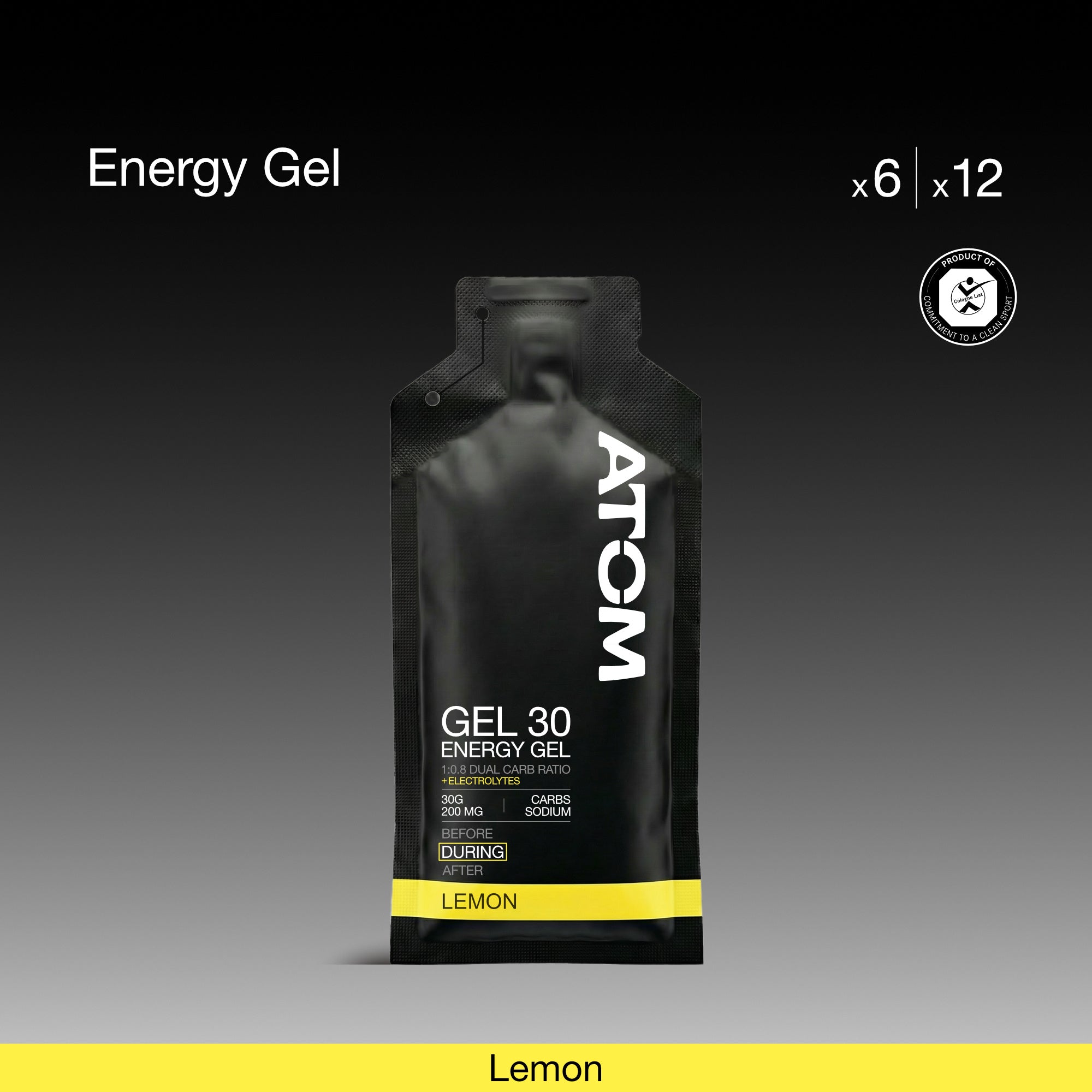
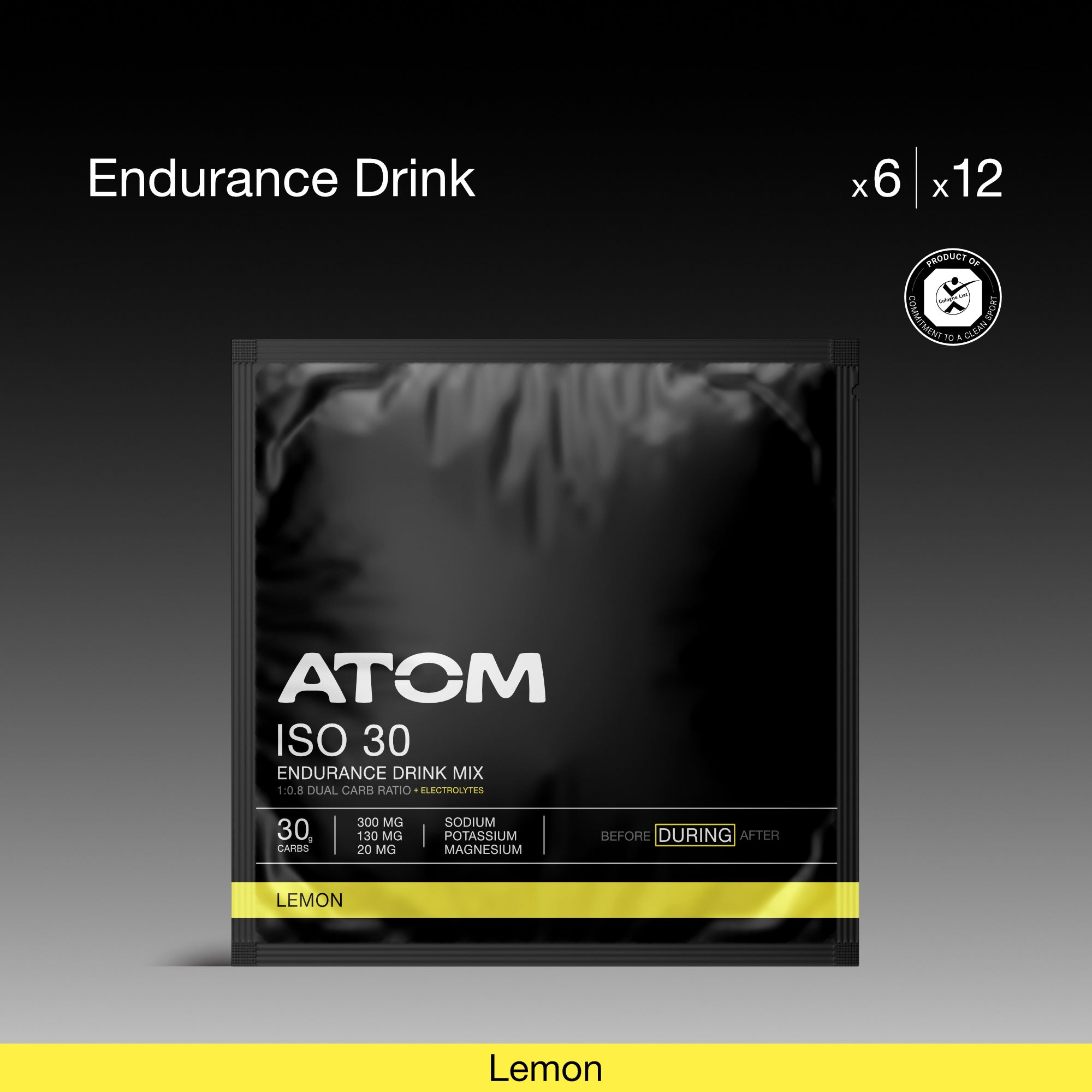
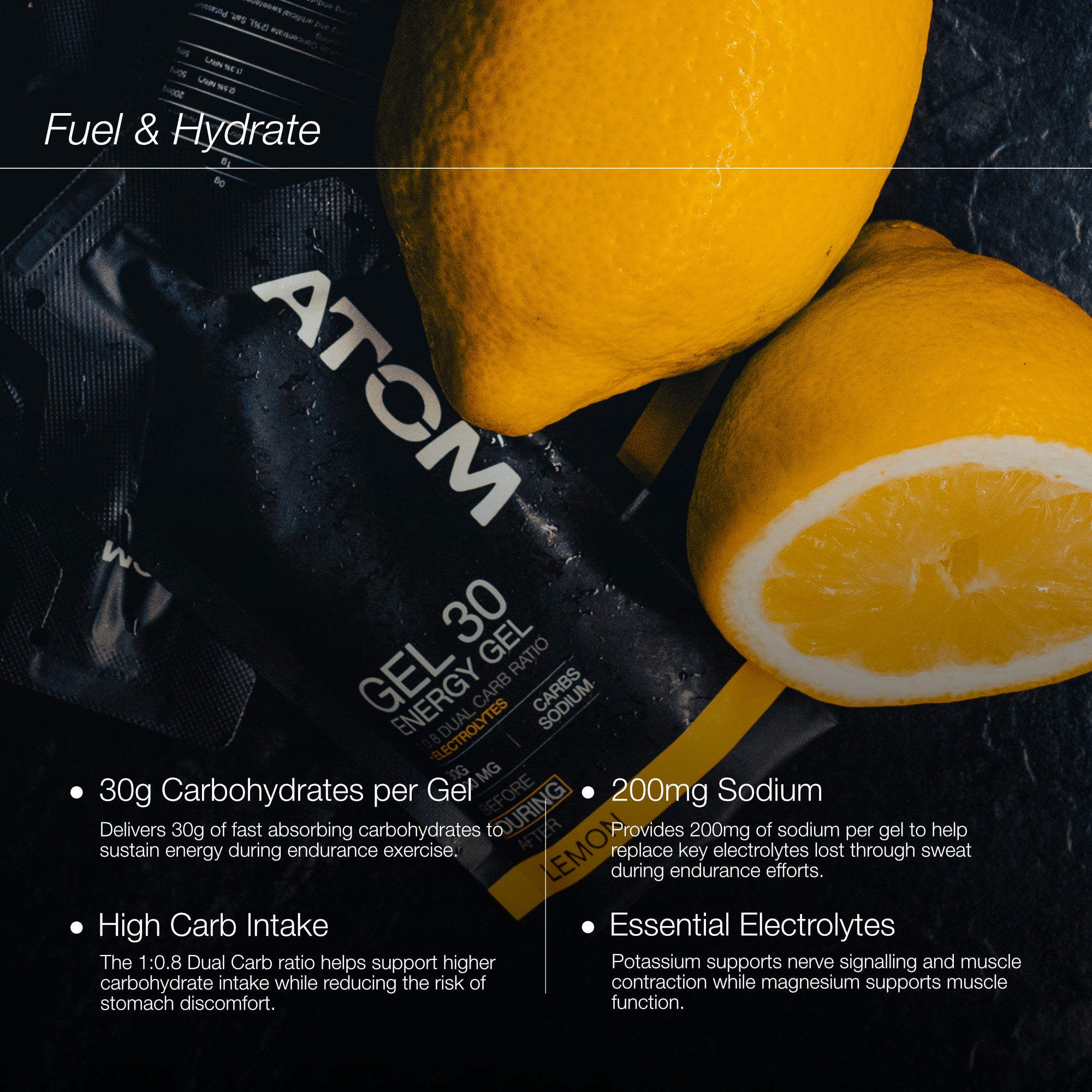
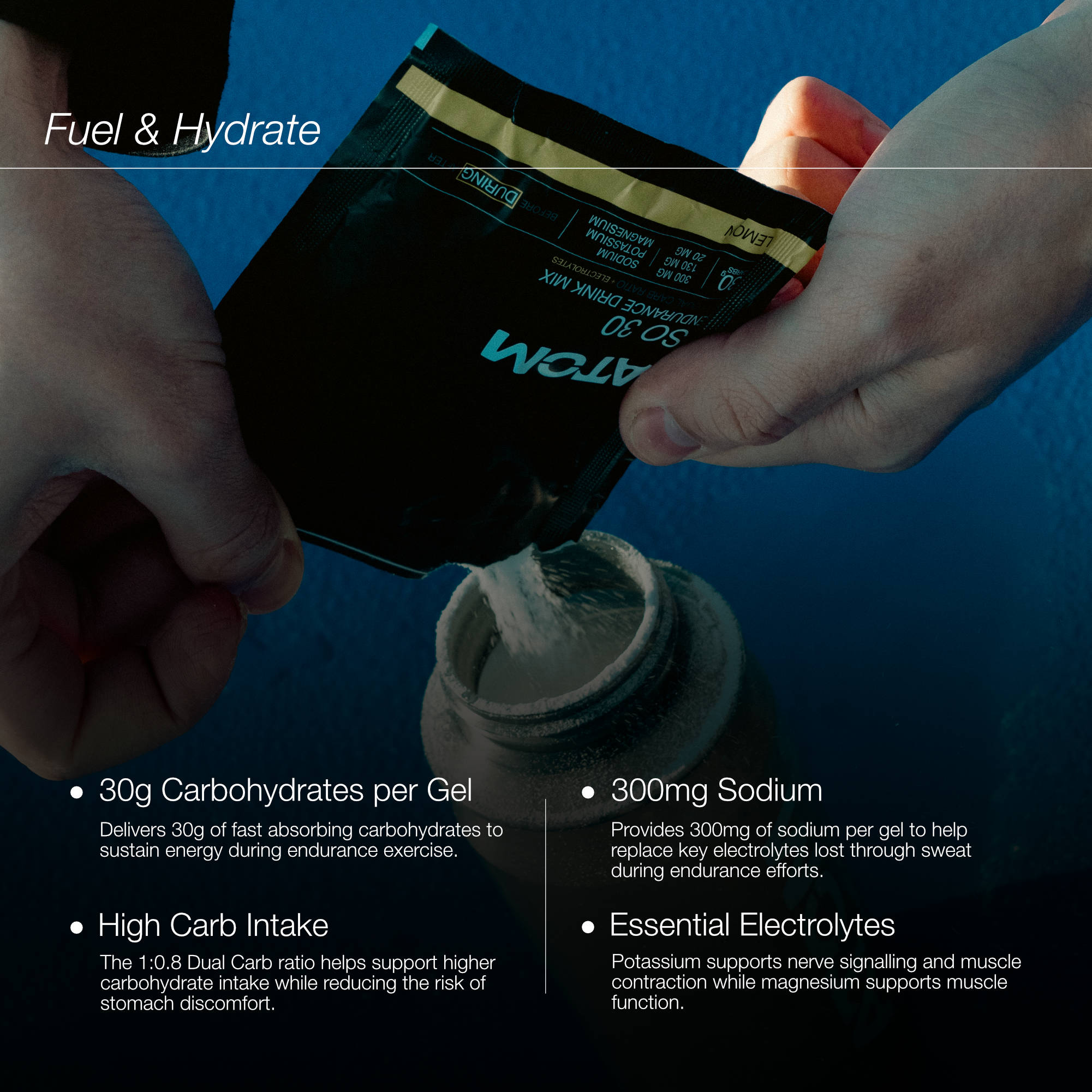
The Ratio: Research highlights that a 1:0.8 glucose-to-fructose ratio is optimal for high-volume absorption.
-
Proof: Studies show that athletes can successfully oxidize 120g/hour with minimal stomach issues when using these specific transportable sources (⁷).
Training Your Digestive System
Just as a cyclist builds "base miles," you must train your gut to handle high fuel loads (⁶).
-
Practice in Training: Don't wait for race day to try a high-carb strategy. Start with 30–40g per hour and increase the dosage every few weeks.
-
Test Your Delivery: Determine if your body prefers the convenience of gels, the hydration of liquid mixes, or the variety of chews during long efforts.
-
Consistency: Regularly consuming carbohydrates during training helps your body upregulate the transporters needed for absorption.
A Common Myth: Fueling by Body Weight Many athletes assume that a larger cyclist needs more carbs per hour than a smaller one. However, research shows that body weight does not determine carb needs during exercise (³). Absorption is limited by the surface area and transporter count of the intestines, which does not scale with muscle mass. A 50kg runner and a 90kg cyclist have roughly the same "gate capacity" for sugar. Focus on the duration of your effort and the intensity of your heart rate, not the number on the scale.
Summary
To help you visualize your fueling strategy, the following infographic breaks down exactly how to scale your intake based on the length and intensity of your session. Whether you are heading out for a short recovery ride or a high-intensity race, you can easily meet your needs by adjusting the number of servings per hour. Use this guide to determine your target carb intake and see how simple it is to hit those numbers by mixing and matching your favorite fueling products.

References
1. American College of Sports Medicine. (2018). What to eat before, during, and after exercise. ACSM’s Health & Fitness Journal, 22(4), 5. https://journals.lww.com/acsm-healthfitness/fulltext/2018/07000/shareable_resource__what_to_eat_before,_during,.4.aspx
2. American College of Sports Medicine. (1996). Exercise and fluid replacement. Medicine & Science in Sports & Exercise, 28(1), i-vii. https://pubmed.ncbi.nlm.nih.gov/9303999/
3. Jeukendrup, A. E. (2014). A step towards personalized sports nutrition: Carbohydrate intake during exercise. Sports Medicine, 44(Suppl 1), S25-33. https://doi.org/10.1007/s40279-014-0148-z
4. Jeukendrup, A. E. (2010). Multiple transportable carbohydrates and their benefits. Gatorade Sports Science Institute. https://www.gssiweb.org/sports-science-exchange/article/sse-108-multiple-transportable-carbohydrates-and-their-benefits
5. Thomas, D. T., Erdman, K. A., & Burke, L. M. (2016). American College of Sports Medicine joint position statement: Nutrition and athletic performance. Medicine & Science in Sports & Exercise, 48(3), 543-568. https://doi.org/10.1249/MSS.0000000000000852
6. Jeukendrup, A. E. (2010). Carbohydrate and exercise performance: The role of multiple transportable carbohydrates. Current Opinion in Clinical Nutrition and Metabolic Care, 13(4), 452-457. https://doi.org/10.1097/MCO.0b013e328339de9f
7. Podlogar, T., Wallis, G. A., Ørtenblad, N., Gejl, K. D., & Plews, D. J. (2022). 13C-glucose-fructose labeling reveals comparable exogenous carbohydrate oxidation during exercise when consuming 120 g/h in fluid, gel, jelly chew, or coingestion. Journal of Applied Physiology, 133(5), 1034-1048. https://doi.org/10.1152/japplphysiol.00091.2022
Related Products